
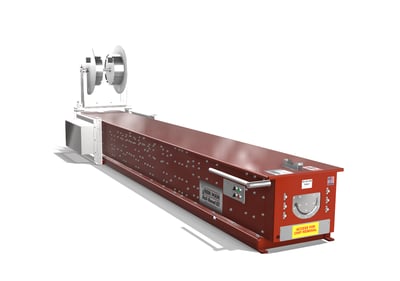
How Does a Seamless Gutter Machine Work?
Seamless gutter machines are precision-forming systems engineered for fabricating continuous-length gutters directly on-site. Unlike sectional systems that rely on multiple joins, seamless gutters are formed from a single coil of metal, shaped in real-time to match the building's exact measurements. The result: cleaner installations, fewer leak points, and a higher standard of durability.
For contractors, these machines are a core part of high-efficiency gutter production: reducing labor hours, minimizing waste, and eliminating transportation risks. Seamless systems also align with modern design demands, offering customizable profiles in materials that suit a wide range of climates and architectural styles.
Why Installers Prefer Seamless Gutter Machines?
Seamless gutter machines offer multiple benefits to professional installers and construction teams:
- Custom-Length Production: Gutters are formed on-site to exact measurements, reducing reliance on stock sizes and eliminating join seams.
- Leak Reduction: Fewer joints mean fewer failure points over time—critical in climates with frequent rainfall or freeze-thaw cycles.
- Increased Efficiency: On-site forming reduces setup time and labor demands. Many crews report 50%+ savings in installation time.
- Material Flexibility: Most machines handle aluminum, galvanized steel, and copper—all common in both residential and commercial markets.
- Aesthetic Integration: Custom profiles and clean finishes contribute to better curb appeal and architectural conformity.
- Durability Across Environments: One-piece design resists corrosion, sagging, and joint failure better than segmented options.
Seamless gutter machines are especially suited for larger-scale projects or tight timelines, where speed and precision are essential.
How Does a Seamless Gutter Machine Work?
The operation of a seamless gutter machine involves four core stages: setup and calibration, material feeding, profile forming, and cutting/output. Here's a detailed look at each step:
1. Machine Setup and System Calibration
Before running coil through the system, proper machine positioning and calibration are essential:
- Leveling: The machine must be placed on a level platform to prevent vibration or misfeeds. Use a bubble or laser level to confirm accuracy.
- Emergency Stop Simulation: Emergency stops should be tested.
- Electrical Checks: Verify that the voltage, grounding, and three-phase balance match the equipment's specifications. Waterproof connections are critical for mobile trailer setups.
These checks ensure stable operation and prevent costly misalignment or electrical faults during forming.
2. Material Preparation and Coil Feeding
Material selection should be based on job specs, local climate, and desired finish:
- Common Coils: Aluminum, steel, and copper
- Positioning: Mount the coil securely in the cradle or upright system. Ensure axial alignment with the machine's feed track.
- Initial Feed: Operators cut 3" ears on the coil's leading edge to help the material engage rollers smoothly.
Proper alignment during this phase is critical. If the coil enters at an angle, the formed gutter will show ripples or edge warping.
3. Continuous Forming Process
Once powered on, the machine uses a drive system, usually a polyurethane roller train, to advance the coil at a uniform speed. As the material progresses:
- Passive polyeruthane roller system
- Forming Rollers sequentially shape the coil into the designated profile
- Roller Gap Adjustments can be made based on material thickness and desired contour
KWM Gutterman machines typically operate at 30–35 feet per minute, making them suitable for high-output crews and long gutter runs.
Operators should monitor roller alignment and drive motor sound. Any deviation in roller pressure or feeding speed can lead to profile inconsistencies.
4. Cutting and Output Handling
Once the desired gutter length is reached:
- The guillotine blade is activated manually.
- The gutter is cut cleanly without burrs or deformation using a high-precision blade system.
- Run out stands support the formed gutter to prevent sagging or scratches.
Materials Supported by Seamless Gutter Machines
The most common materials processed include:
| Material | Application | Notes |
|---|---|---|
| Aluminum | Residential, light commercial | Lightweight, corrosion-resistant |
| Painted Steel/Galvalume | Commercial, industrial | Strong, heavier, requires coating |
| Copper | High-end residential, historic restoration | Durable, aesthetic, expensive |
Each material may require adjustments in roller pressure or forming speed, depending on gauge and coil quality.
After the Cut: Downspouts and Elbows
A seamless gutter machine forms the horizontal run. It does not form the fittings that carry water down and away from the building, so every job still needs downspout elbows, and most crews buy those in. The IronMan Elbow Machine (SKU: EL1000) closes that gap, forming elbows from the same coil already loaded on your gutter machine so the fitting matches the gutter on every job.
It runs 2x3 and 3x4 downspout stock in A and B configurations, with mandrel and die sets sold separately so sizes can be added as the work demands. A dedicated Elbow Machine Manual sits alongside the gutter machine manuals on our manuals page. For the full step-by-step operating procedure covering setup, coil loading, forming and shutdown, see our guide to operating seamless gutter machines.
Operator Tips for Reliable Gutter Machine Performance
- Always pre-inspect coil edges for dents or warps.
- Periodically clean forming rollers with acetone to avoid buildup.
- Apply light lubrication to the guillotine daily but never over-lubricate near rollers.
- Check for foreign debris before every production cycle.
Built to Perform: Why Professionals Trust KWM Gutterman
At KWM Gutterman, we engineer long-term solutions for professional installers who demand reliability, precision, and efficiency on every job. Our seamless gutter machines are built with premium-grade components, robust structural frames, and advanced forming systems that stand up to high-volume use in demanding environments.
From the IronMan Series to our specialty profile machines, each unit is designed to operate smoothly with minimal adjustment, reducing downtime and eliminating common mechanical failures seen in lower-grade systems. That's why professionals choose KWM Gutterman when performance matters most.
Ready to elevate your gutter operation?
Explore our machines and parts lineup, or contact our support team for personalized advice on troubleshooting, upgrades, and professional servicing.
Call us toll-free at (888) 729 4290, or during business hours at (815) 405 1731 or (815) 405 1729.
FAQs: How Does a Seamless Gutter Machine Work?
Can I use painted coil?
Yes!
How is gutter length controlled?
Standard gutter length control would be with a tape machine or if you purchase a smart machine, it provides a programmable length.
How often should I lubricate the guillotine?
Daily, using a light oil like WD-40 with the blade in the down position.
Can one machine make different profiles?
We offer different combination machines for 5-6" K style, 6-7", (view common machines on the website).
For more frequently asked questions, check out our general FAQ page.