
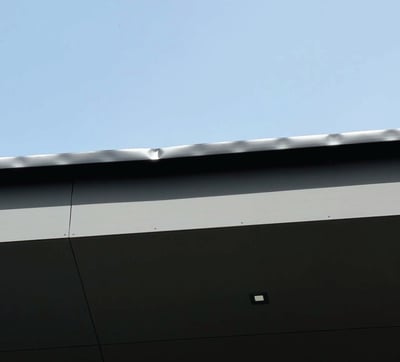
How Heat Causes Gutter Expansion
This article was originally provided by Interstate Material Supply, a partner of KWM Gutterman and a trusted supplier serving gutter contractors and professionals throughout the Southwest. Their team specializes in gutter materials, accessories, and contractor support across Arizona and California.
How Heat Causes Gutter Expansion in Arizona and California
Living in the Southwest means preparing for intense sun and wild temperature swings. In Arizona and California, your rain gutters aren’t just sitting there. They are physically growing and shrinking every single day. If you don’t account for thermal expansion, those beautiful new gutters can buckle, pull away from the fascia, or tear at the seams within just a few seasons.
The Physics of Expansion: 5″ vs. 6″ Gutters
Whether you choose a standard 5-inch residential gutter or a high-capacity 6-inch gutter, the physics of thermal expansion remains the same.
While a 6-inch gutter carries roughly 40% more water, the rate at which the metal expands depends on the material (aluminum) and the length of the run, not the size of the gutter. In extreme climates like Phoenix or the Inland Empire, a 50-foot run of aluminum can expand or contract by over 3/8 of an inch with just a 50-degree temperature shift.
Why .027″ and .032″ Expand the Same
There is a common misconception that thicker gutters (.032”) expand less than standard .027” thick gutters.
Thermal expansion is governed by the Coefficient of Linear Expansion, which is a fixed property of the material. Since both .027″ and .032″ gutters are made from the same aluminum alloy, they expand at the exact same rate per foot.
However, thicker .032″ material is better at resisting the effects of that movement. It is sturdier, less likely to buckle or “oil can,” and better maintains its shape when secured with hangers.
The “Cold Day” Trap
Timing matters when installing gutters in high-heat climates. If gutters are installed during a cold morning, the aluminum is in its most contracted state. Once summer temperatures rise, the metal expands and can begin bowing or snaking along the roofline if there is no room for movement.
In the Southwest, gutter temperatures often exceed ambient air temperatures because of direct sunlight exposure.
- Cold State: 40°F morning temperatures create the shortest gutter length.
- Hot State: 110°F outdoor temperatures can push gutter surface temperatures beyond 150°F.
- The Result: Expansion pressure increases dramatically during summer heat cycles.
Why Gutter Color Matters
Color selection affects more than curb appeal in Arizona and California.
- Lighter Colors: White and cream gutters reflect more sunlight and remain closer to ambient temperatures.
- Darker Colors: Black and bronze gutters absorb more heat and can run 30 to 40 degrees hotter than lighter colors.
Darker gutters experience more aggressive expansion and contraction cycles, especially on long gutter runs.
Pro Tip for Long Gutter Runs
For gutter runs exceeding 40 to 50 feet, expansion joints are highly recommended. Expansion joints create controlled movement points that help reduce stress on hangers, seams, and fascia attachments.
Expansion joints become even more important when darker gutter colors are used in high-heat climates.
How to Reset Buckled Gutters
- Inspect the affected section and clear debris around the hangers.
- Loosen and remove screws from the affected gutter section.
- Allow the gutter to naturally relax and straighten.
- Verify the proper slope toward the downspout.
- Re-fasten the system using hidden hangers secured into solid wood.
- Seal unused holes with waterproof exterior sealant.
FAQs About Heat and Gutter Expansion
Quick answers to the questions contractors ask most often about thermal expansion in high-heat climates.
Do 6-inch gutters expand more than 5-inch gutters?
No. The rate at which the metal expands depends on the material and the length of the run, not the size of the gutter, so a 5-inch and a 6-inch aluminum gutter of the same length move the same amount.
Do thicker .032″ gutters expand less than .027″ gutters?
No. Thermal expansion is governed by the Coefficient of Linear Expansion, a fixed property of the material, so both gauges expand at the exact same rate per foot. Thicker .032″ material does resist the effects of that movement better, since it is sturdier and less likely to buckle or oil can.
How much does a long aluminum gutter run actually move?
In extreme climates like Phoenix or the Inland Empire, a 50-foot run of aluminum can expand or contract by over 3/8 of an inch with just a 50-degree temperature shift.
Does gutter color affect how much a gutter expands?
Yes. White and cream gutters reflect more sunlight and stay closer to ambient temperatures, while black and bronze gutters absorb more heat and can run 30 to 40 degrees hotter. Darker gutters go through more aggressive expansion and contraction cycles, especially on long runs.
When should I use expansion joints on a gutter run?
Expansion joints are highly recommended for gutter runs exceeding 40 to 50 feet. They create controlled movement points that help reduce stress on hangers, seams, and fascia attachments, and they become even more important when darker gutter colors are used in high-heat climates.
Why do gutters installed on a cold morning buckle in summer?
Aluminum installed on a cold morning is in its most contracted state. Once summer temperatures rise, the metal expands and can begin bowing or snaking along the roofline if there is no room for movement. In the Southwest, 110°F outdoor temperatures can push gutter surface temperatures beyond 150°F.